
Last week I was walking through a new subdivision with a client, looking at what the developer proudly called their “sustainable community.” Every house had solar panels, drought-tolerant plants (read: gravel and three sad shrubs), and Energy Star appliances. But you know what they didn’t have? Proper building orientation, adequate insulation, or any understanding of how buildings actually work in our climate. It’s like putting racing stripes on a broken-down car and calling it high-performance.
This drives me absolutely nuts. I’ve been designing sustainable sites for nineteen years now, and I keep seeing the same backwards approach to green building. Everyone wants the flashy stuff – the solar panels, the smart home gadgets, the exotic recycled materials shipped from halfway around the world. But ask them about basic building science? Crickets.
The problem isn’t that people don’t care about sustainability. They do, especially here in California where water bills can make you weep and everyone’s worried about climate change. The problem is we’ve completely lost sight of what sustainable design actually means. It’s not about adding green widgets to conventional buildings. It’s about working with natural forces instead of fighting them every step of the way.
I figured this out the hard way on my own house back in 2015. My husband and I had just bought this 1970s ranch that was supposedly “updated” with new windows and a high-efficiency furnace. Great, I thought, we’re all set. Then our first summer utility bill arrived. Two hundred and forty-three dollars. For a 1,400-square-foot house. Something was seriously wrong.
Turns out those “new” windows were installed without proper flashing, the insulation was maybe R-11 if you were being generous, and there were gaps in the building envelope you could literally see daylight through. All that expensive efficient equipment was working overtime to compensate for a fundamentally broken building. We were heating and cooling the neighborhood.

That experience taught me the first real principle of sustainable design: climate response. Your building needs to work with your local conditions, not against them. Sounds obvious, right? But I see the same house plans used from San Diego to Sacramento, despite completely different climate conditions. The same wall assemblies, the same window orientations, the same everything. It’s insane.
Here in the Bay Area, we have this amazing Mediterranean climate with cool, wet winters and warm, dry summers. Traditional buildings responded to this beautifully – thick walls for thermal mass, deep overhangs for summer shading, courtyards for natural cooling. Modern construction ignores all of this and then tries to fix the problems with mechanical systems. Backwards.
I learned to really pay attention to microclimate when I started working with native plants. You can’t just say “California native” and call it good. Plants that thrive in coastal Marin will die in inland Walnut Creek, even though they’re thirty miles apart. Same principle applies to buildings. What works in foggy San Francisco won’t work in sunny San Jose without modifications.
The second principle is what I call the energy pyramid, though the engineers like to use fancier terms. It’s simple: first reduce demand, then meet remaining demand efficiently, then – and only then – think about renewable generation. Most people flip this completely around, jumping straight to solar panels without fixing massive energy waste first.
I had a client last year who was convinced she needed a bigger solar array because her electric bills were still high after installing panels. We did an energy audit and found she was losing about half her conditioned air through ductwork in an unconditioned attic. The ducts weren’t even sealed properly – they were literally bleeding expensive cooled air into a 120-degree attic space. We spent eight hundred dollars sealing ducts and saved her more money than doubling her solar array would have.
This happens constantly. People get excited about generating clean energy, which I totally understand. Solar panels are visible, they feel good, they’re something you can point to and say “look how green we are.” But fixing insulation? Sealing air leaks? Boring. Nobody takes Instagram photos of properly installed weatherstripping. Yet that’s where the real impact happens.
After you’ve minimized energy loads through good building envelope design, then you optimize equipment efficiency. High-performance HVAC systems, heat pump water heaters, LED lighting – all great, but only after you’ve reduced the loads they need to handle. A well-designed building can cut energy use by sixty or seventy percent before you even think about equipment upgrades.
Material selection is where I see the most ridiculous greenwashing. I can’t tell you how many times builders have bragged to me about their “sustainable” bamboo flooring (shipped from China), their reclaimed wood beams (trucked from Vermont), their recycled glass countertops (manufactured in Italy). The transportation alone probably canceled out any environmental benefit.
Real sustainable material selection considers the full lifecycle – extraction, manufacturing, transportation, installation, performance, maintenance, and eventual disposal. Local materials almost always win this calculation. Here in California, that means embracing what works in our climate and is produced regionally. Concrete for thermal mass. Metal roofing for solar reflection. Local stone or recycled concrete for hardscaping.
I’ve gotten skeptical of exotic green materials. Cork flooring might be renewable, but if it’s shipped from Portugal and costs four times more than locally-produced alternatives, is it really sustainable? Meanwhile, basic concrete – not sexy, not trendy – can provide excellent thermal performance, lasts decades, and is produced locally with regional materials.
Durability matters enormously but gets ignored constantly. A material that lasts twice as long has half the environmental impact per year of service. I’ve seen “green” buildings using trendy materials that failed within three years, creating more waste than conventional materials that would have lasted twenty.
Water management is huge, especially here in drought-prone California. This isn’t just about low-flow faucets (though those help) but understanding water as a precious resource requiring thoughtful management. In landscape design, this means choosing plants adapted to local rainfall patterns, designing irrigation systems that don’t waste water, and creating outdoor spaces that can thrive with minimal supplemental water.
I worked on a residential project in Palo Alto where we completely rethought water systems. Instead of sending roof runoff to storm drains and then buying city water for irrigation, we designed collection basins and cisterns to capture and store rainwater. The homeowner went from paying hundreds of dollars monthly for landscape irrigation to having surplus harvested water most years. The infrastructure cost maybe two thousand dollars extra but saves money and water indefinitely.
Indoor water efficiency matters too, but it’s not just about gallons per minute. Hot water distribution systems should minimize waste through proper pipe sizing and insulation. Greywater systems can reduce both supply and disposal loads where codes permit. The key is thinking about water flows holistically rather than just swapping in efficient fixtures.
Waste prevention is probably the most important principle but the most ignored. The greenest building material is the one you don’t need. The most sustainable energy is the energy you don’t consume. This requires designing for actual needs rather than worst-case scenarios, right-sizing systems instead of oversizing for safety margins, and choosing durable solutions over cheap replacements.
I see massive waste in typical construction. Homes designed with more space than families use, HVAC systems sized for theoretical peak loads that occur maybe five days per year, landscape irrigation systems that could water a small farm. Everything gets oversized because it’s easier than calculating actual requirements, but the waste is enormous.
Waste prevention also means designing for adaptability. Buildings should accommodate changing uses without major reconstruction. In landscape design, this means creating flexible outdoor spaces that can evolve with changing needs and preferences.
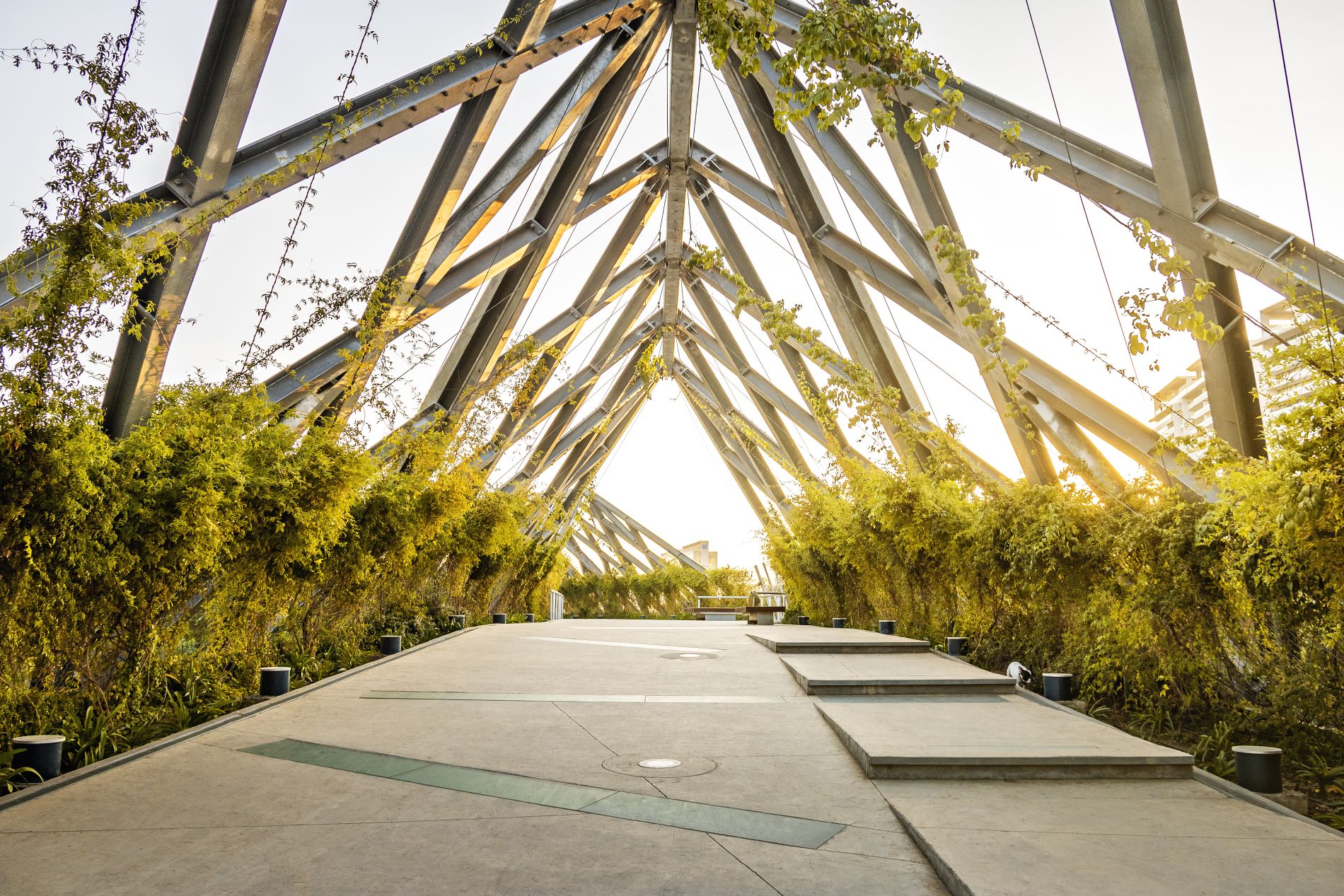
The final principle is systems thinking – understanding how different components interact rather than optimizing individual pieces. I learned this working on a commercial project where every individual element was high-quality but the overall performance was terrible because nobody considered how they worked together.
Your building orientation affects solar heat gain. Your window placement affects daylighting and cooling loads. Your landscape design affects microclimate around the building. Everything connects. Optimizing pieces individually often creates worse overall performance than designing the whole system thoughtfully.
This is why so many LEED buildings perform poorly despite expensive green features. They add sustainable elements to conventional designs without rethinking the fundamental approach. Real sustainable design requires understanding buildings and sites as integrated systems responding to climate, serving human needs efficiently, and minimizing resource consumption over their lifespans.
These principles aren’t revolutionary. Traditional builders understood most of this intuitively – they had to, because energy was expensive and materials were limited. We’ve just forgotten these basics in our rush toward standardization and technological solutions. The path forward isn’t more gadgets but better application of timeless principles using contemporary knowledge and materials.

Elijah is a senior materials engineer developing sustainable building products in North Carolina. With fifteen years in materials testing and R&D, he bridges science and construction—writing about real performance data, embodied carbon, and how innovation (not greenwashing) shapes the future of building materials.
