I had to Google “biophile” the first time someone used it to describe me. This was about two years ago during a productivity-focused Slack discussion where I’d shared some photos of my home office setup. Someone commented “classic biophile workspace” and I honestly had no clue what they meant. Felt like I was missing some obvious reference.
Turns out they were right, though I didn’t realize it at the time.
Biophilia – literally “love of life” or “love of living things” – describes this innate human tendency to seek connections with nature and other forms of life. The term was popularized by biologist E.O. Wilson in the 1980s, though the concept is much older. When you think about it, the evidence is everywhere: we’re drawn to parks, we keep houseplants, we pay extra for apartments with tree views. That’s not random preference – it’s biology.
<blockquote>Here’s what got interesting for me as someone who spends 40+ hours a week in a home office. Biophilia isn’t just about weekend hiking trips or vacation time in nature (though those matter). It’s about recognizing that our deep need for nature connection doesn’t disappear when we’re working indoors. We spend roughly 90% of our lives inside buildings, but most workspaces completely ignore this fundamental human drive.</blockquote>
I learned this through trial and error during my early remote work years. My first home office was basically a sterile box – fluorescent lighting, no plants, one tiny window I barely looked at. I’d track my productivity religiously but couldn’t figure out why some days I felt mentally drained by noon while other days I’d power through complex analysis with no problem.

<img class=”size-full” src=”https://biophilicflair.com/wp-content/uploads/2025/09/im1979_what_is_biophile._ultra-realistic_ishutter_1125s.rende_d29c5f28-0511-4766-89d8-f015b81f0efc_0.jpg” alt=”im1979_what_is_biophile._ultra-realistic_ishutter_1125s.rende_d29c5f28-0511-4766-89d8-f015b81f0efc_0″ />
The science behind biophilia is pretty solid. Research shows that exposure to natural elements triggers measurable physiological changes: reduced cortisol levels, lower blood pressure, improved immune function. There’s something called “attention restoration theory” that explains why a five-minute walk outside can completely reset your mental focus. Makes sense when you consider our brains evolved in natural environments.
<img src=”https://biophilicflair.com/wp-content/uploads/2025/09/im1979_what_is_biophile._ultra-realistic_ishutter_1125s.rende_d29c5f28-0511-4766-89d8-f015b81f0efc_0.jpg” alt=”im1979_what_is_biophile._ultra-realistic_ishutter_1125s.rende_d29c5f28-0511-4766-89d8-f015b81f0efc_0″ class=”size-full” />
Roger Ulrich’s famous 1984 study showed that hospital patients with views of trees recovered faster and needed less pain medication than those facing brick walls. That’s medical-grade evidence for something most of us intuitively understand – natural views make us feel better. I started paying attention to this in my own workspace and the correlation was obvious once I looked for it.
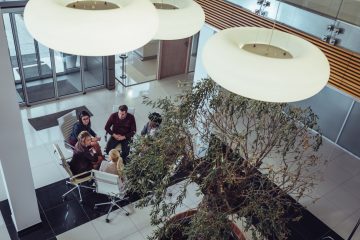
A coworker of mine experienced this at company level. Her team moved to a new office building last year – beautiful modern space, all glass and steel. But within months, people were complaining about feeling drained. Productivity metrics dropped. Focus time decreased. The problem seemed obvious once you looked for it: zero connection to nature. No plants, no natural materials, windows that didn’t open, artificial lighting that never changed throughout the day.
They brought in some workplace design consultant who implemented what they called “stealth biophilia” – changes people might not consciously notice but would definitely feel. Living walls in common areas. Lighting systems that mimicked natural daylight patterns. Reclaimed wood furniture and stone accents. Better sight lines to outdoor spaces they’d been ignoring. The transformation in employee satisfaction surveys was remarkable within six months.
That’s what’s interesting about biophilia – it works whether you understand it or not. Your nervous system responds to natural patterns and materials subconsciously. I read research showing that fractal patterns found in nature (tree branches, coastlines, cloud formations) can reduce stress by up to 60%. That’s partly why certain wallpapers or architectural details feel more calming than others.
Water features are another powerful element. The sound of moving water masks distracting noise while providing that subconscious connection to natural processes. I tested this with a small desktop fountain in my office – simple $40 purchase – and immediately noticed I felt calmer during phone calls. My focus time tracking showed measurable improvement. Visitors always comment on how peaceful the space feels without necessarily identifying why.
Plants are the most obvious biophilic element, but they’re trickier than people assume. You can’t just stick a dying ficus in a dark corner and call it nature connection. Plants need to actually thrive to provide psychological benefits. Nothing kills the vibe like brown, wilting vegetation. I spent considerable time researching which plants would actually survive my light conditions and maintenance capabilities. Sometimes artificial plants work better than struggling live ones – though I know that’s controversial.
Natural materials create instant biophilic connections too. Wood, stone, bamboo, wool – these materials carry information about natural processes that we recognize on some level. Your hands feel the texture variations in real wood grain. Your nose picks up subtle scents from natural fibers. I’ve noticed people unconsciously run their fingers along wooden surfaces or linger near stone accent pieces without understanding why.
But biophilia extends beyond individual elements to entire spatial experiences. Views matter enormously. Even images of nature can provide measurable stress reduction – though direct views or physical access work better. I always prioritize window placement in my workspace setup. When that’s not possible, I use mirrors or strategic artwork to reference natural spaces and create what some designers call “borrowed views.”
Temperature variations also connect us to natural cycles. Most buildings maintain constant 72-degree temperatures, which feels unnatural to our bodies that evolved with seasonal and daily temperature changes. In my current office setup, I have slightly different temperature zones – a cooler reading area, a sun-warmed spot by the window. These subtle variations remind us we’re living organisms responding to environmental cues.
The temporal aspect of biophilia is something I’ve gotten really interested in tracking. Nature constantly changes – light shifts throughout the day, seasons transform landscapes, weather creates atmospheric variations. Static spaces feel dead because they ignore this dynamism. I invested in smart lighting that shifts color temperature from warm morning tones to bright midday white to golden afternoon hues. The productivity impact was immediately noticeable in my daily tracking.
<img src=”https://biophilicflair.com/wp-content/uploads/2025/09/im1979_what_is_biophile._ultra-realistic_ishutter_1125s.rende_d29c5f28-0511-4766-89d8-f015b81f0efc_1.jpg” alt=”im1979_what_is_biophile._ultra-realistic_ishutter_1125s.rende_d29c5f28-0511-4766-89d8-f015b81f0efc_1″ class=”size-full” />
Biophilia also connects to cultural traditions I’ve been reading about. Indigenous architecture worldwide demonstrates sophisticated understanding of human-nature relationships. Japanese design principles, Mediterranean courtyards, Middle Eastern wind towers – these approaches integrated natural elements not as decoration but as functional necessities. There’s a lot to learn from these vernacular traditions when optimizing modern workspaces.
<img class=”size-full” src=”https://biophilicflair.com/wp-content/uploads/2025/09/im1979_what_is_biophile._ultra-realistic_ishutter_1125s.rende_d29c5f28-0511-4766-89d8-f015b81f0efc_1.jpg” alt=”im1979_what_is_biophile._ultra-realistic_ishutter_1125s.rende_d29c5f28-0511-4766-89d8-f015b81f0efc_1″ />

The business case for biophilic design keeps getting stronger too. Companies report increased productivity, reduced absenteeism, improved creativity, and better employee retention in spaces with strong nature connections. Real estate values increase for properties with good natural light and outdoor access. Healthcare facilities see faster patient recovery. Schools report improved student attention and academic performance.
<blockquote>Yet resistance remains. Budget constraints, maintenance concerns, and simple unfamiliarity with the approach create barriers. I’ve found success starting small with other remote workers – a few well-chosen plants, natural material accents, or improved window placement – then building on what works. The key is measuring the impact so you can justify further investment.</blockquote>
Understanding biophilia has fundamentally changed how I experience and optimize spaces. I can’t walk into any room without noticing natural light quality, material choices, or nature connection opportunities. It’s made me better at creating productive work environments, but also more conscious of how physical spaces affect my daily performance and well-being.
Most importantly, recognizing our biophilic nature reminds us that we’re not separate from the natural world – we’re part of it, even when surrounded by technology and artificial environments. Good workspace design honors that connection and works with our biology instead of against it.

David is a dad of two who started caring about design after realizing how much their home environment affected his kids’ moods and sleep. He writes about family-friendly, budget-friendly ways to bring natural light, plants, and outdoor play back into everyday life.