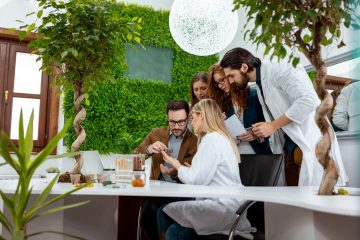
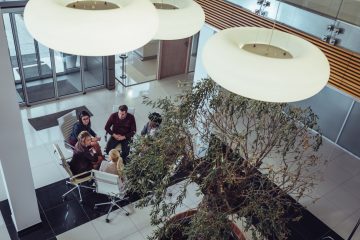
I got a call last month that really got me thinking. It wasn't about my kids' school this time – it was from a mom in our neighborhood whose company was dealing with what she called "office depression." Sarah manages facilities for a tech company downtown, and she sounded completely drained when she described their workspace: "It feels like a hospital. People are constantly calling in sick, nobody wants to be there, and honestly? I dread walking in every morning."
This hit close to home because I've been obsessing over environmental design for years now – started when I noticed how much our home's lighting and layout affected my kids' moods and sleep. I've read enough about biophilic design to know that the same principles that help kids thrive at home absolutely apply to adult work environments.
Sarah asked if I'd come take a look since she knew about my "house projects" (that's what everyone calls my ongoing quest to make our split-level less soul-crushing). I'm definitely not a professional designer, but I've spent so much time researching environmental psychology and natural design that I figured I could at least point her in the right direction.
Walking into their 15th-floor office was honestly depressing. Fluorescent lights humming overhead with that greenish tint that makes everyone look sick. Gray carpet, white walls, black furniture – exactly the kind of sterile environment I've been trying to escape at home. They had these amazing floor-to-ceiling windows with city views, but somehow they felt completely disconnected from the actual workspace. Filing cabinets blocked half the natural light, and workstations were positioned like they were actively avoiding the windows.
The thing that struck me most was how quiet it was – not in a good way, but in that dead, oppressive way that makes you want to whisper. People were hunched over laptops with the same defeated posture I used to have during those dark winter months before I learned about seasonal lighting issues.
"How long has it been like this?" I asked as we walked around.
"Since the renovation three years ago," Sarah said. "We went for 'clean and professional.' I thought it looked great at the time."
I told her about something I'd been reading lately – restoration design. It's not just slapping some plants in a corner and calling it biophilic. It's about actually healing spaces that have been stripped of everything that makes us feel human. Kind of like what I've been doing room by room in our house, trying to undo decades of bad design decisions.
I spent a whole day there just watching – same approach I used when I was trying to figure out why my kids were so cranky in certain rooms. The patterns were obvious once you looked for them. Everyone kept finding excuses to hang around the small break area near the windows – the only spot with decent natural light. They'd grab coffee and then linger, checking phones, having longer conversations than necessary. Meanwhile, the interior workstations turned into ghost towns after 3 PM.
I brought my light meter (yes, I own one now – occupational hazard of becoming the neighborhood's amateur lighting expert). Most workstations were getting 200-300 lux, which is technically enough for computer work but nowhere near what our brains need to function properly. I've learned that we need 10,000+ lux to keep our circadian rhythms happy – no wonder everyone looked half-asleep.
Here's what got me excited though – this office had good bones, just like our house did under all that terrible 1960s paneling. Those beautiful windows were the key. Instead of blocking them with storage, we repositioned workstations to maximize natural light exposure. Sounds simple, right? But within a week of the furniture shuffle, Sarah reported people arriving earlier and staying alert longer.
I brought my sound meter next (I've accumulated quite the collection of measuring tools over the years). The acoustic environment was brutal – all hard surfaces creating constant low-level stress from reflected noise. But instead of expensive acoustic panels, I suggested something I'd learned from my failed living wall experiment: use plants as natural sound barriers. Large planters with broad-leafed plants create sound absorption while adding humidity and air purification.
I recommended pothos, snake plants, and rubber trees – all species I've tested extensively in our house for their tolerance of less-than-ideal conditions and their measurable impact on air quality. My kids' rooms have several of these, and I've noticed the difference in both air quality and visual softness.
Three months later, Sarah called again, and this time she sounded energized. "People are actually collaborating again," she said. "And our sick day usage is down by almost 30%."
That's exactly what I've seen at home – when you address the fundamental disconnect between human needs and environmental conditions, improvements cascade through everything. My son's ADHD symptoms are more manageable in rooms with plants and natural light. My daughter focuses better on homework near windows. Same principles, different scale.
They added a water element next – not some fancy fountain, but a simple hydroponic wall system in the main corridor. I'd been wanting to try something similar in our house ever since my disastrous living wall attempt (water damage and mold – expensive lesson learned). The gentle sound of moving water, the visual movement, the slight humidity increase – these address our biological programming that associates water movement with safe, habitable environments.
I watched one of their developers who used to eat lunch at his desk every day start taking regular breaks near the water wall. When Sarah asked him about it, he just shrugged and said, "I think better here." That's biophilic design working on a subconscious level – same reason my kids naturally gravitate toward our backyard water feature when they need to decompress.
The material changes took longer but proved equally important. They gradually replaced plastic furniture with wood pieces, switched synthetic fabrics for natural fibers, and introduced stone and ceramic elements. Budget-conscious swaps that addressed the sensory sterility – exactly the approach I've taken with our house renovations.
What fascinated me was how quickly people adapted. Within six months, Sarah's team had unconsciously reorganized their daily patterns around the natural elements. Morning meetings happened near east-facing windows to catch early light. Afternoon brainstorming sessions gravitated toward the planted areas. People started bringing their own plants to personalize workstations – something that never happened in the sterile previous version.
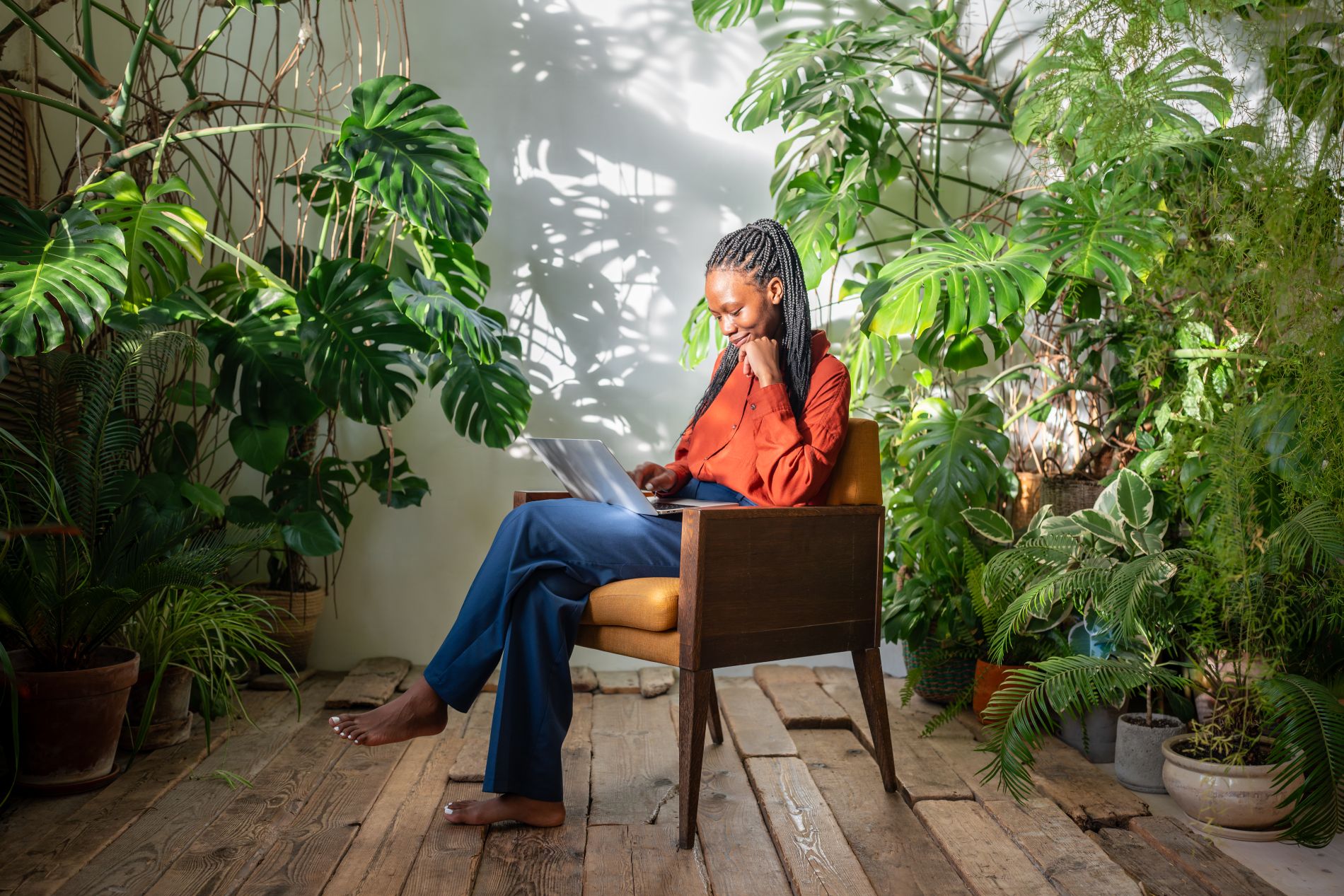
The productivity metrics were impressive – task completion rates up 18%, sick days down significantly, employee satisfaction scores improved across every category. But what struck me most during my final visit was something less measurable: the space felt alive again.
This whole experience reinforced what I've learned from years of gradually transforming our house – creating environments that support rather than drain our biological systems isn't luxury, it's necessity. We spend most of our time indoors, whether it's home or work. Making those spaces actually work with human nature instead of against it should be the baseline, not some special design trend.
I've started volunteering with our school district's facilities committee, applying some of these same principles to my kids' classrooms. Progress is slow when you're dealing with institutional budgets and bureaucracy, but I figure every small improvement helps. Plus, my kids think it's pretty cool that their dad is the one suggesting plants and better lighting in their school.
Sarah's office transformation has become my go-to example when other parents ask about environmental design. It proves that these principles work at any scale – whether you're trying to help your ADHD kid focus better in their bedroom or creating a workplace that doesn't make everyone want to call in sick.

Jeff writes about bringing bits of nature into everyday living spaces — not as a designer, but as a curious renter who experiments, fails, and keeps trying again. He shares what he’s learned about light, plants, and small changes that make big differences for real people living in ordinary apartments.