I'll be honest – I'd never heard the term "regenerative design" until about a year ago. I was deep in one of my late-night research sessions (you know how it is when the kids are finally asleep and you can actually focus), trying to figure out some landscaping issues in our backyard. Our soil was basically dead clay, nothing would grow properly, and I kept reading about how important it is for kids to have access to healthy outdoor spaces.
That's when I stumbled across this article about a housing development in Northern California that had actually improved the land it was built on. Not just "sustainable" in the sense of doing less damage, but actually making the ecosystem healthier than before any houses existed. My first thought was honestly skeptical – sounded like marketing nonsense. But the more I dug into it, the more I realized this might be exactly what I'd been looking for without knowing it.
See, I'd been approaching all our home improvements from a pretty limited perspective. How do we make our house healthier for our kids? How do we create outdoor spaces they'll actually want to use? How do we reduce our environmental impact? All good questions, but I was thinking too small. Regenerative design asks a completely different question: how can our homes and communities actually heal the places where we live?
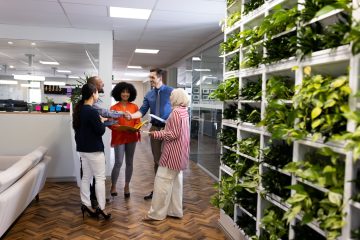
<img class="size-full" src="https://biophilicflair.com/wp-content/uploads/2025/09/im1979_regenerative_design_group._ultra-realistichyper-detail_3e80852e-ae3f-454a-b9f4-e7aba09cf880_0.jpg" alt="im1979_regenerative_design_group._ultra-realistichyper-detail_3e80852e-ae3f-454a-b9f4-e7aba09cf880_0" />
This led me to the Regenerative Design Group, which is basically a network of architects, planners, and designers who are pioneering this approach. I've been following their work for months now, and it's completely changed how I think about everything from our backyard renovation to the kinds of development I want to see in our community.
<img src="https://biophilicflair.com/wp-content/uploads/2025/09/im1979_regenerative_design_group._ultra-realistichyper-detail_3e80852e-ae3f-454a-b9f4-e7aba09cf880_0.jpg" alt="im1979_regenerative_design_group._ultra-realistichyper-detail_3e80852e-ae3f-454a-b9f4-e7aba09cf880_0" class="size-full" />
What really got my attention was reading about one of their projects in Detroit. They took a former industrial site that was planned for standard mixed-use development and discovered it had originally been part of a wetland system that helped prevent flooding in the surrounding neighborhood. Instead of just building around that constraint, they designed the entire development to restore those wetland functions while creating innovative housing.
Think about that for a minute – families living in homes that are literally part of a functioning ecosystem. Kids playing in areas that double as natural stormwater management. Community gardens that help filter runoff from the streets. The development actually reduced flooding in the surrounding area and brought back native wildlife that hadn't been seen in decades.
This is exactly the kind of thinking I wish we had more of in our suburb. We deal with flooding issues every spring because all the natural drainage was disrupted when the neighborhood was built in the 1960s. Instead of working against natural water patterns, what if future development actually helped restore them?
I started applying some of their research methods to our own property, and it's been fascinating. Before making any more changes to our backyard, I spent time learning about what our land was like originally. Turns out we're on what used to be prairie with some oak savanna areas. The compacted clay soil that gives me so much trouble? That's what happens when you remove deep-rooted native plants and replace them with shallow-rooted lawn grass.
So instead of fighting against our soil conditions, I'm slowly working with them. Started converting sections of lawn to native prairie plants that can actually handle clay and help break it up over time. It's been a longer process than I initially wanted, but my kids are learning about local ecosystems in a hands-on way, and we're starting to see improvements in soil health and water drainage.
The Regenerative Design Group's educational resources have been incredibly helpful for understanding these principles at a homeowner level. They offer workshops and online courses that break down complex ecological concepts into practical applications. I attended a virtual session last spring about biomimicry in landscape design – basically learning from how natural systems work and applying those lessons to our yards and gardens.
One concept that really stuck with me was studying mycorrhizal networks – the underground fungal connections that help forests share resources. Got me thinking about how neighborhoods could work more like forest ecosystems, with resources and knowledge sharing between households rather than everyone trying to be completely self-sufficient.
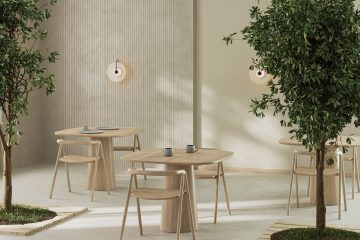
<img src="https://biophilicflair.com/wp-content/uploads/2025/09/im1979_regenerative_design_group._ultra-realistichyper-detail_3e80852e-ae3f-454a-b9f4-e7aba09cf880_1.jpg" alt="im1979_regenerative_design_group._ultra-realistichyper-detail_3e80852e-ae3f-454a-b9f4-e7aba09cf880_1" class="size-full" />
This has actually influenced how I approach community involvement now. Instead of just focusing on our individual property improvements, I've started thinking about how our block could work together on things like stormwater management, native habitat restoration, and resource sharing. Got a few neighbors interested in coordinating our landscaping choices to create wildlife corridors between yards.
<img class="size-full" src="https://biophilicflair.com/wp-content/uploads/2025/09/im1979_regenerative_design_group._ultra-realistichyper-detail_3e80852e-ae3f-454a-b9f4-e7aba09cf880_1.jpg" alt="im1979_regenerative_design_group._ultra-realistichyper-detail_3e80852e-ae3f-454a-b9f4-e7aba09cf880_1" />
What I appreciate about the Regenerative Design Group's approach is how they address social equity alongside environmental restoration. They recognize that environmental problems and community health are connected – the neighborhoods that face the most environmental challenges often have the fewest resources to address them. Their projects consistently include community ownership models and local economic development.
> The Regenerative Design Group's influence extends through their publications and research collaborations with universities worldwide. They're documenting methodologies, measuring outcomes, and building evidence bases that help legitimize regenerative approaches within mainstream design and development industries.
This research aspect gives me hope that these approaches might actually scale up beyond individual projects. As a parent, I'm constantly thinking about what kind of world my kids are inheriting. Climate change, biodiversity loss, social inequality – it can feel overwhelming. But regenerative design offers a framework for addressing these challenges in integrated ways rather than tackling them separately.

I've started bringing some of these ideas into my PTA involvement and local parks committee work. When we're discussing playground renovations or school building improvements, I ask questions about how these projects could contribute to ecosystem health and community resilience, not just serve immediate functional needs.
The results in our own backyard have been encouraging enough that several neighbors have asked for advice on similar projects. We're seeing more native birds, better drainage during heavy rains, and my kids are developing genuine relationships with the plants and wildlife in our yard. My son, who struggles with ADHD, finds the garden particularly calming and has become our family expert on identifying different native insects.
I'm not claiming to be implementing full-scale regenerative design – we're just homeowners trying to make better choices. But the principles I've learned from following the Regenerative Design Group's work have given me a framework for thinking beyond just making our immediate environment healthier for our family to considering how our choices can contribute to healing the broader community and ecosystem we're part of.
It's a longer-term perspective that requires patience and continuous learning, but it feels like the kind of approach that might actually create lasting positive change for our kids' generation. Instead of just trying to minimize harm, we're learning to be a healing presence in the places where we live.

Thomas runs a residential contracting firm in Oregon focused on sustainable construction. With decades of hands-on experience, he writes candidly about what works (and what doesn’t) when building greener homes in the real world.