You know, after thirty-eight years in the same house, I’ve watched our suburban neighborhood change in ways that don’t always make sense. More pavement, fewer trees, houses built right up to property lines with no consideration for natural drainage or wildlife corridors. Makes you wonder if there’s a better way to plan communities from the start.
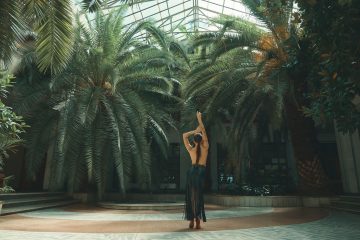
I started thinking about this more seriously after modifying our home for my wife’s mobility needs. All that research into healing gardens and accessible outdoor spaces led me down some interesting paths, including reading about something called biophilic urbanism. Basically, it’s the idea of designing cities that work with nature instead of paving over it completely.
Now, I’m not a city planner – just a retired engineer who’s spent the last several years figuring out how environment affects quality of life. But I’ve been fascinated by examples of places that actually got this right, where they didn’t treat nature as something to squeeze in around the edges but as an integral part of how a city functions.
Take Singapore, for instance. I read about their approach in some planning journals our daughter shared with me. Here’s a place with over five million people crammed into an area roughly the size of one of our smaller counties, yet they’ve managed to integrate so much greenery that they call it a “City in a Garden.” When you see the photos – buildings covered in vertical gardens, parks that actually function as stormwater management, trees incorporated right into the urban infrastructure – it makes you realize how backwards most of our development patterns have been.
The principle behind all this isn’t complicated. It’s based on what biologist E.O. Wilson called “biophilia” – the idea that humans have an innate connection to nature. We need it for our mental and physical health, but we’ve designed most of our communities as if that connection doesn’t matter.
I’ve seen this firsthand in my own modifications. When I enlarged our windows to get more natural light into the house, both my wife and I felt better almost immediately. When I created that raised garden bed where she can tend plants from her wheelchair, her mood improved dramatically. It’s not just aesthetic – there’s something fundamental about being able to see and interact with living, growing things.
What struck me about the biophilic urbanism examples I’ve studied is how they go beyond just adding a few parks. Portland, Oregon has what they call green infrastructure that includes rain gardens and eco-roofs designed to capture and reuse rainfall. Makes perfect sense from an engineering perspective – you’re solving multiple problems at once. Managing stormwater, reducing energy costs for buildings, creating habitat for wildlife, and giving people access to nature all in one integrated system.
Melbourne, Australia has committed to doubling their urban tree cover by 2040, specifically to address what they call urban heat islands and improve air quality. Having lived through Michigan summers that seem to get hotter every year, I can appreciate why that matters. The concrete and asphalt in cities absorb and radiate heat in ways that make summers nearly unbearable without constant air conditioning.
The health benefits aren’t just theoretical either. Research shows that access to natural light, green spaces, and water features can reduce stress, improve cognitive function, and even lower the risk of chronic diseases. I’ve experienced this myself – days when my wife spends time in our modified garden or greenhouse, she complains less about pain and sleeps better. Same for me, actually.
But what really interests me is how these principles could be applied to the communities where most of us actually live – not just major international cities, but regular American towns and suburbs. How do you retrofit existing neighborhoods to be more connected to nature? How do you modify infrastructure that was built with no consideration for natural systems?
Some of it comes down to simple changes that don’t require massive reconstruction. When our church was looking at improving their fellowship hall, I suggested larger windows and some indoor plants along with the accessibility modifications. Cost very little extra but made a huge difference in how the space feels. People actually want to spend time there now instead of rushing through meetings.
The challenges are real, though. Building codes and zoning laws often work against these kinds of improvements. Our city has regulations about what you can plant in your front yard, restrictions on collecting rainwater, requirements for impermeable surfaces that create more runoff problems. It’s like the rules were written by people who never considered how human-made systems might work with natural ones instead of fighting against them.
Financial constraints are another issue. Most retirees aren’t working with unlimited budgets for home modifications, and most cities are dealing with tight finances too. But I’ve found that many biophilic improvements actually save money over time – better natural lighting reduces electric bills, proper drainage prevents expensive water damage, native plants require less maintenance than exotic landscaping.
The key is education and demonstrating what works. When neighbors see how our accessible garden improved my wife’s quality of life, they start asking questions about their own spaces. When I volunteer with the senior center to help improve their environment – adding plants, maximizing natural light, creating better connections to outdoor spaces – other people notice the difference.
What gives me hope is seeing how much impact relatively small changes can have. You don’t need to completely rebuild a city to make it more livable and connected to nature. You can start with individual homes, work up to neighborhoods, influence institutional spaces like churches and community centers.
I think about the potential for places where the artificial barriers between built environments and natural systems start to break down. Where your daily routines include genuine contact with growing things, natural light, flowing water. Where getting from point A to point B isn’t just about moving through sterile corridors but about experiencing the seasons, seeing birds, breathing cleaner air.
This isn’t some fantasy about going back to rural life – it’s about making urban and suburban environments work better for the people who live in them. Cities and towns that function more like healthy ecosystems, where human needs and natural systems support each other instead of being in constant conflict.
We’re at a point where we have the knowledge and examples to do this better. The research on biophilic design is solid. The successful case studies exist. The technology for things like green roofs, rain gardens, and energy-efficient natural lighting keeps improving.
What we need is more people willing to try these approaches in their own spaces and advocate for them in their communities. Whether that’s modifying your home for better natural light, supporting native plant landscaping in public spaces, or pushing for building codes that allow innovative approaches to stormwater management.
I’m still learning and experimenting in my own space – currently working on better year-round access to our greenhouse and looking at options for natural cooling that would reduce our dependence on air conditioning. But every modification has reinforced my conviction that we can create environments that support both human health and ecological health at the same time.
It’s not about perfection or massive transformation overnight. It’s about recognizing that the way we’ve been building communities for the last fifty years hasn’t been working that well for most people, and there are better approaches available if we’re willing to try them.

Robert is a retired engineer in Michigan who’s spent the past few years adapting his longtime home for accessibility and wellbeing. He writes about practical, DIY ways to make homes more comfortable and life-affirming as we age — from raised-bed gardens to better natural light.