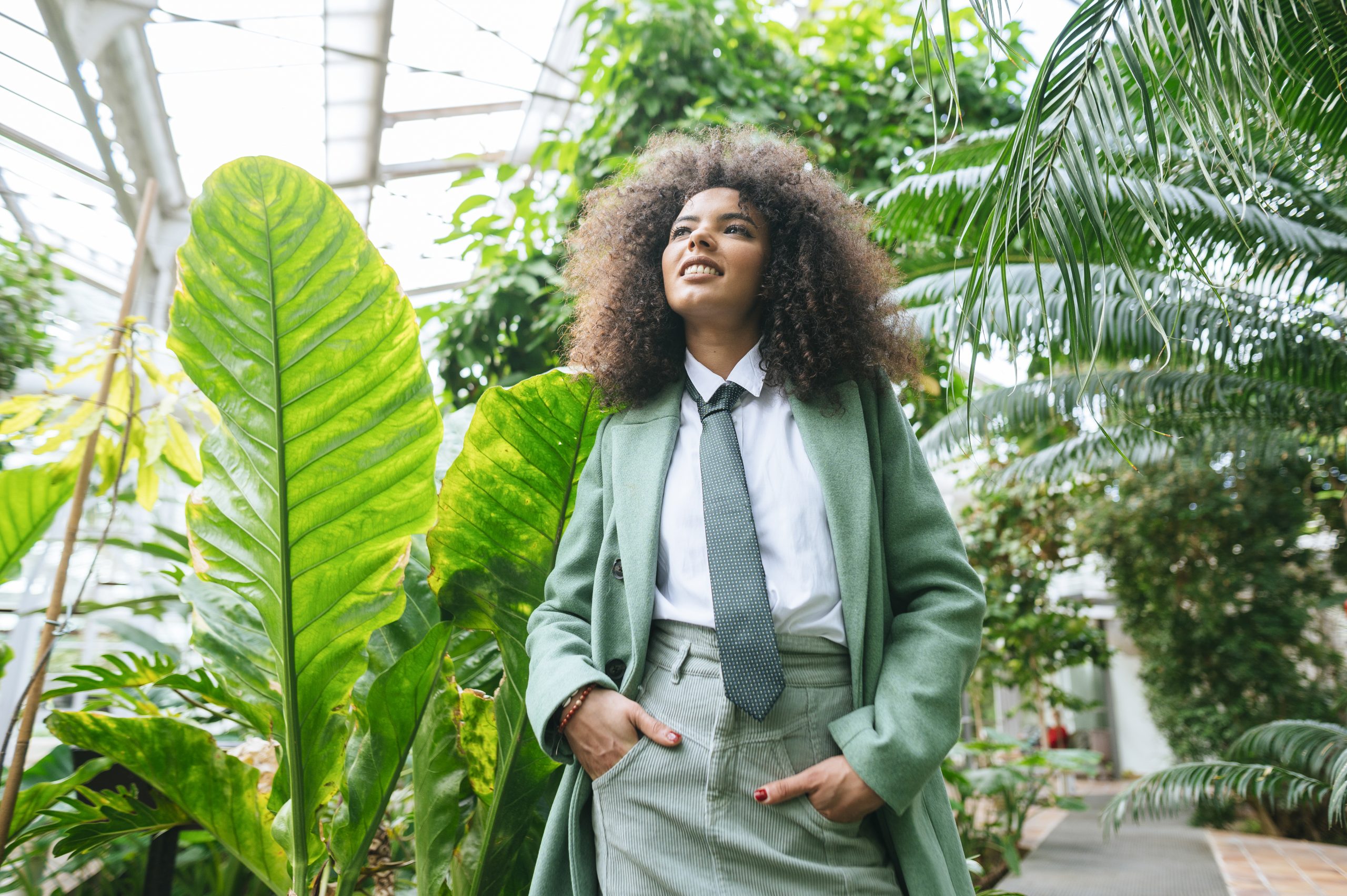
Fashion exists at the intersection of human creativity and environmental reality. For most of fashion’s modern history, that intersection has been destructive. But biophilic fashion—the deliberate integration of nature-inspired design principles into clothing—represents a fundamental shift in how designers approach their craft.
Biophilic fashion isn’t about slapping leaf patterns on fabric. It’s about understanding why humans are drawn to certain shapes, colors, textures, and proportions found in nature, and translating that understanding into wearable design that feels inherently right.
Biophilic elements reduce stress hormones by 15-60% in office settings, with similar benefits extending to personal environments per Terrapin Bright Green studies. This extends to what we wear. When you put on clothing designed with biophilic principles—natural colors, organic shapes, textiles that feel like nature—your nervous system responds differently than when you wear synthetic, rigid designs.
The market recognizes this. The global sustainable fashion market reached $10.1 billion in 2025, projected to hit $15 billion by 2030 at a 9.1% CAGR. Sustainable apparel’s revenue share worldwide will climb to 6.14% in 2026. But sustainability alone isn’t biophilic. Biophilic fashion goes deeper—it’s about the actual design reflecting nature’s principles, not just the production being ethical.
This guide covers how biophilic design principles translate to fashion, what makes nature-inspired clothing work neurologically and aesthetically, and how designers can integrate these principles into their work.
The Neuroscience of Nature-Inspired Fashion
Your brain processes biophilic design principles before you consciously think about them. This applies to what you wear.
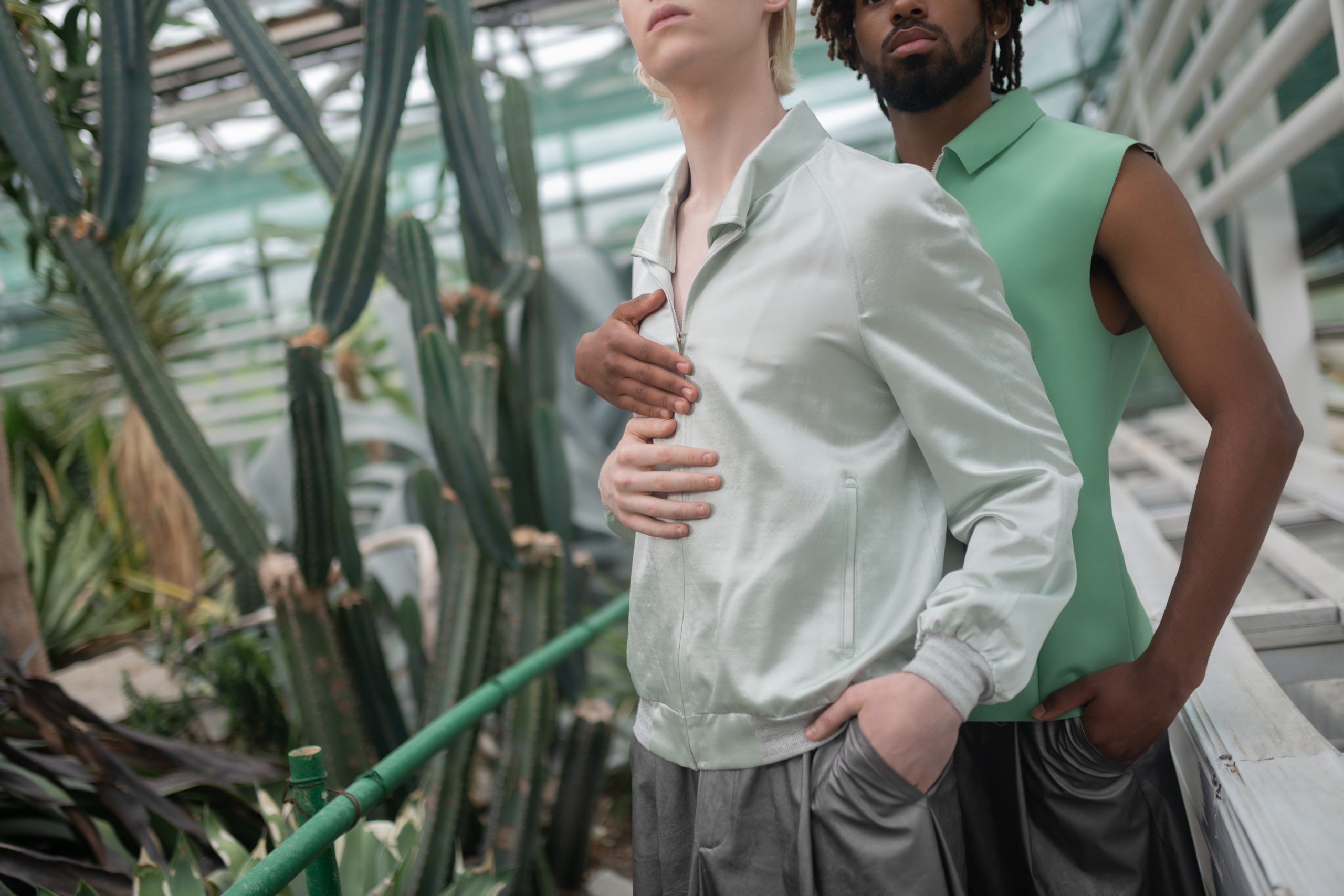
Color psychology in natural palettes: Nature uses specific color ranges. Greens, blues, earth tones, warm neutrals. These aren’t random—they represent plants, sky, soil, and stone. When you wear these colors, your brain recognizes them as “natural” and responds with lower cortisol and higher calm.
Synthetic colors—neon, harsh blacks, bright primary colors—don’t appear in nature the same way. Your brain registers them as artificial. This doesn’t mean you can’t wear them. It means if you’re designing for biophilic principle, you understand that natural color palettes trigger different neurological responses than synthetic ones.
Organic shapes and curves: Nature doesn’t have right angles. All natural forms feature curves, spirals, fractals. When clothing uses organic shapes—flowing silhouettes, curved seams, spiral hemlines—it triggers recognition at a neurological level different from rigid, geometric designs.
Research on fractals shows humans find mid-range complexity fractals (like those found in nature) inherently calming. When a garment’s pattern or construction includes fractal-like qualities—branching seams, tree-like patterns, spiraling details—wearers report higher comfort and confidence.
Tactile authenticity: Fabrics matter. Natural fibers—cotton, linen, wool, silk—have different tactile properties than synthetics. Your skin responds to the texture. Exposure to natural materials lowers stress and activates different neural pathways than synthetic materials.
When you design biophilic fashion, the fabric choice isn’t aesthetic—it’s neurological. Someone wearing a linen shirt experiences different stress hormones than someone wearing polyester, even if the visual design is identical.
Design Frameworks: How Biophilic Principles Translate to Clothing
Understanding the framework helps you apply biophilic design systematically rather than randomly.
1. Nature-Derived Color Palettes
Don’t invent colors. Extract them from nature.
| Color Source | Fashion Application | Psychological Effect | Best For |
|---|---|---|---|
| Forest greens | Primary color for pieces, dyes | Calm, grounding, healing | Base pieces, dresses, outerwear |
| Sky blues | Accents, overlays, patterns | Peace, clarity, trust | Shirts, accessories, details |
| Earth tones (taupe, ochre, clay) | Grounding colors, warmth | Stability, connection to soil | Pants, jackets, foundations |
| Warm neutrals (cream, sand, warm gray) | Soft backgrounds, base layers | Safety, approachability | Underlayers, neutral pieces |
| Rust and terracotta | Accent colors, details | Warmth, creative stimulation | Scarves, linings, trim |
| Deep charcoal/brown | Grounding, not pure black | Less harsh than black, still depth | Pants, jackets, structure |
| Sage and muted greens | Calming primary colors | Gentle nature connection | Dresses, leisurewear, comfort pieces |
The key: use colors at the saturation they appear in nature, not hyper-saturated versions. A sage green feels biophilic. A neon green doesn’t, even if it’s technically “green.”
2. Organic Shape Language
Translate natural shapes into garment construction.
- Curved seams instead of right angles: Natural bodies curve. Garments that follow curved seams rather than rigid lines move better and feel more biophilic.
- Asymmetrical hemlines: Nature rarely creates perfect symmetry. Asymmetrical hems, layered edges, and irregular silhouettes feel more natural than perfect symmetry.
- Spiral and branching pattern placement: Patterns that mimic trees, branches, or spirals feel inherently more biophilic than grid-based or geometric patterns.
- Tapered rather than structured: Clothing that tapers and flows (like leaves on a branch) feels more biophilic than stiffly structured pieces.
- Layering and depth: Nature uses layering (leaves over bark, petals over sepals). Garments with layered construction, visible textures, and depth feel more biophilic than flat, uniform pieces.
3. Natural Fiber Selection and Prioritization
Fiber choice directly impacts biophilic principle. The fiber itself carries information about its origin.
| Fiber | Biophilic Properties | Design Implications | Authenticity Factor |
|---|---|---|---|
| Organic cotton | Soft, breathable, renewable | Good for casual, comfortable pieces | High—natural growth process visible |
| Linen | Crisp, breathable, cool, ages beautifully | Excellent for structured biophilic pieces | Very high—visible texture |
| Wool | Insulating, textured, natural crimp | Perfect for depth and texture in designs | Very high—yarn variation visible |
| Silk | Fluid, lustrous, luxurious, temperature-regulating | Ideal for flowing, organic silhouettes | High—natural sheen can’t be replicated |
| Hemp | Durable, textured, sustainable, cool | Excellent for structured pieces, texture | Very high—visible texture variation |
| Recycled fibers | Depends on source, variable quality | Good for statement pieces, transparency needed | Medium—requires context for meaning |
| Synthetic blends | Often used for performance, but lacks biophilic authenticity | Acceptable only with clear functional reason | Low—doesn’t trigger biophilic response |
The principle: choose fibers where you can see and feel their natural origin. A linen dress feels biophilic because you can see the fiber irregularities. A polyester dress dyed to look linen doesn’t, because your tactile sense knows it’s synthetic.
4. Closure and Detail Design
Small details communicate biophilic principle or undermine it.
- Natural closures: Wooden buttons, bone buttons, natural toggles feel biophilic. Plastic zippers and snaps don’t.
- Visible stitching: Perfect, hidden stitching feels industrial. Visible, slightly irregular stitching feels handmade and natural.
- Raw edges and natural seams: Finishing techniques that show the fabric’s natural state feel more biophilic than perfectly hemmed, invisible seams.
- Hardware from natural materials: Copper, brass, wood, bone hardware feels more biophilic than plastic or nickel.
Nature-Inspired Design Approaches: Specific Methods
Biomimicry in Structure
Study how nature solves problems, then apply that to garment construction.
Example: Spider silk is stronger than steel but flexible. Designers studying this create garments with tensile strength in unexpected places—thin straps that support weight, minimal structure that maximizes function.
Another example: Bird feather structure creates warmth through air trapping without bulk. Designers apply this principle to quilting and layering techniques that achieve insulation with minimal weight.
Pattern Development from Natural Forms
Don’t photograph nature and print it directly. Extract the underlying pattern principles.
- Growth patterns: Fibonacci sequences found in sunflower seed spirals, branching trees. Use these proportions in pattern placement, not as literal imagery.
- Fractals: Self-similar patterns at different scales. Apply fractal principles to how patterns repeat, how colors shift across a garment.
- Cellular structures: Honeycomb, leaf veins, tree bark. Use the proportional relationships as pattern guidance, not as direct imagery.
- Water flow and erosion patterns: Meandering lines, pooling shapes. Apply these principles to seam placement and pattern flow.
The key: understand the underlying mathematical/structural principle, then express it through color, seam placement, or pattern rather than literal representation.
Color Gradation Following Natural Transitions
Nature transitions colors gradually—sunrise, sunset, ocean to sky. Use these transitions in garment construction.
- Ombre and gradient dyeing: Not bright contrasts. Subtle shifts from one natural color to another.
- Color blocking with natural harmony: Place colors together as they appear in nature (sky-blue with cloud-white, forest-green with earth-brown) rather than contrasting complements.
- Texture creating color variation: Using different natural fibers or weaves to create subtle color variation without actual dye variation.
Tools and Techniques for Nature-Inspired Fashion Design
Design Tools:
- Pantone Fashion Color Report: Releases seasonal color trends rooted in nature observation. Use this as a reference for natural color palettes.
- Illustrator and pattern-making software: Create patterns based on fractal principles using mathematical tools or plugins that generate fractal-based patterns.
- Draping over forms: Rather than flat pattern-making, draping allows organic shapes to emerge naturally from how fabric moves.
- Natural material libraries: Physical samples of natural fibers, dyes, and textures. Touch and feel them while designing.
- Photography reference collection: Build a library of nature photography organized by color, pattern, and shape. Develop a visual language before designing.
- Nature sketching: Spend time drawing nature directly. Trees, leaves, water flow, rock formations. This builds intuitive understanding better than photo reference.
Research Methods:
- Biomimicry databases: Organizations like the Biomimicry Institute catalog nature’s solutions to design problems.
- Nature documentation: David Attenborough documentaries, nature photography books, field guides. Study how nature actually looks and functions.
- Textile archives: Museums and historical textile collections show how natural dyes, fibers, and techniques were historically applied.
- Supplier relationships: Build relationships with sustainable textile suppliers who understand fiber properties and natural dyes.
Common Mistakes in Nature-Inspired Fashion Design
Mistake 1: Literal Imagery Without Understanding Principle
Printing a leaf pattern on fabric isn’t biophilic design. The pattern should reflect the underlying principle (fractal complexity, color gradation, organic growth) through the design language, not through literal imagery.
Mistake 2: Using Synthetic Fibers in “Natural” Designs
A polyester dress with a nature print looks biophilic but lacks neurological biophilic response. The tactile disconnect undermines the visual message.
Mistake 3: Ignoring Color Saturation and Undertones
A neon green marketed as “nature-inspired” because it’s technically green doesn’t feel biophilic. The saturation matters. Nature uses desaturated, warm-toned colors. Match actual nature’s color palette, not invented “nature” colors.
Mistake 4: Applying Biophilic Elements Superficially
Adding one organic seam to an otherwise rigid, synthetic garment doesn’t make it biophilic. The principle needs to permeate the design—fiber choice, color, silhouette, closure, construction method.
Mistake 5: Over-Complicating Simplicity
Some of the most biophilic designs are the simplest. A perfectly-cut linen shirt in natural color with wooden buttons is more biophilic than an overly complex design with multiple pattern layers. Restraint is a principle.
Examples of Biophilic Fashion Done Well
Patagonia’s Regenerative Approach
Regeneration doesn’t stop at the source—it extends to how garments live and die. Patagonia designs for longevity and end-of-life recyclability. Their color palettes are natural—they dye with earth-tone dyes rather than synthetic bright colors. Their garments use organic and recycled fibers. The design philosophy—simple, functional, built to last—reflects biophilic principle through minimalism and durability.
Stella McCartney’s Material Innovation
McCartney focuses on natural fiber alternatives and innovative materials derived from plant sources. Her designs use flowing silhouettes, organic color palettes, and visible craftsmanship. The biophilic principle isn’t in literal nature imagery—it’s in the material authenticity and design philosophy.
Independent Designers Using Biomimicry
Designers like Natsai Audrey Chieza study nature directly and apply biomimetic principles to garment construction. Her work shows how understanding mycelium networks (fungal structures) can inform fabric innovation and garment construction.
The Market Reality: What Consumers Actually Want
35% of U.S. consumers pay more for biodegradable or recyclable clothing, prioritizing eco-materials. Eco-friendly clothing sales surged by $1.57 billion globally in 2025 alone.
But this data conflates sustainability with biophilic design. Consumers want both—they want clothing that’s environmentally responsible AND feels connected to nature. The most successful nature-inspired fashion brands deliver on both.
The opportunity: design biophilic fashion that’s also sustainable. Natural fibers, natural dyes, simple construction that lasts, designs that improve with age. This is where the market is moving.
Where to Start: Practical Steps for Designers
1. Build Your Nature Reference Library
Spend 2-4 weeks collecting images, sketches, and samples organized by:
- Color palettes (greens, blues, earth tones, warm neutrals)
- Patterns (fractals, spirals, branching, cellular)
- Shapes (organic curves, asymmetry, layering)
- Textures (bark, leaves, stones, water)
2. Source Natural Fibers and Dyes
Contact sustainable textile suppliers. Request samples of:
- Organic cotton in various weights
- Linen in multiple colors
- Wool in natural shades
- Plant-based dyes and how colors shift with them
3. Study Existing Biophilic Designers
Analyze how accomplished designers apply these principles:
- What colors do they use?
- How do they construct garments?
- What fibers do they choose?
- What details communicate biophilic principle?
4. Sketch Without Constraint
Design pieces focusing purely on organic shapes, natural colors, and biophilic principle. Don’t worry about market viability yet. Understand how you naturally express these principles.
5. Create a Sample Piece
Design and construct one garment applying everything you’ve learned:
- Natural fiber choice
- Organic silhouette
- Natural color palette
- Biophilic-inspired closures and details
Wear it. See how it feels. Understand what works and what doesn’t in practice.
The Larger Principle
Biophilic fashion isn’t a trend. It’s a recognition that humans are fundamentally connected to nature, and that connection should extend to what we wear. When you design biophilically, you’re creating clothing that acknowledges this connection through every choice—materials, colors, shapes, construction.
Brands are moving beyond organic cotton to regenerative cotton. The market is moving toward deeper integration of biophilic principle, not just sustainable production.
The designers who understand this—who can translate nature’s principles into wearable design that feels inherently right—will define the next era of fashion.
Your role as a designer is to understand nature deeply enough that your designs feel like natural extensions of human biology and preference, not imposed concepts. When you achieve that, the design works. Consumers feel it. The market responds.

Leave a Reply