
I spent a week in Copenhagen studying how the city integrated biophilic principles at urban scale. Streets designed with cycling paths and water views. Parks accessible from every neighborhood. Buildings with green roofs visible from the street. The city wasn’t trying to recreate nature—it was systematically integrating nature into urban infrastructure. The result felt fundamentally different from most cities. People lingered in public spaces. The pace felt less harried. Even in winter, the green presence created psychological effect.
What struck me was recognizing that biophilic design at city scale creates conditions that individual building design alone can’t achieve. A single biophilic building in a sterile city provides benefit to occupants. But a city designed with biophilic principles creates ecosystem-level effect. You can’t escape the nature connection. It’s embedded in how the city functions.
Biophilic Urbanism: Designing Cities for Nature Connection
Biophilic urbanism treats nature connection as central urban planning principle rather than amenity. It asks: how can we design cities so that nature is accessible, visible, and integrated throughout the urban environment? The answer involves green infrastructure, wildlife corridors, water features, and building design that supports nature at city scale.
This approach directly contradicts typical urban development that maximizes building footprint and minimizes green space. Biophilic urbanism inverts priorities—how much green can we integrate while maintaining urban function? The results are cities that support human wellbeing while supporting biodiversity and ecosystem health.
Timothy Beatley’s research on biophilic cities documents that cities designed with nature integration show measurable improvements in public health, air quality, stormwater management, and resident satisfaction. It’s not sacrifice of urban functionality. It’s improved functionality through nature integration. Understanding how biophilic design works at all scales shows why these principles apply to cities as much as buildings.

Green Roofs: When Buildings Become Ecosystems
Green roofs integrate vegetation directly into building roofs, transforming what would be sterile heat-generating surfaces into living systems. The benefits compound across multiple scales. Individual building level: green roofs provide insulation reducing energy consumption. Water management: green roofs capture stormwater reducing drainage burden on city infrastructure. Ecosystem level: green roofs create habitat corridors for birds and insects. Biophilic level: visible greenery creates psychological benefits for residents and passersby.
A building with green roofs literally functions differently than conventional buildings. Temperature regulation improves. Stormwater runoff decreases. Maintenance costs potentially decrease through reduced HVAC demands. Urban heat island effect in the surrounding area decreases as more roofs shift from dark heat-absorbing surfaces to reflective vegetation. These are systemic benefits that scale across cities implementing green roof requirements.
Copenhagen and Singapore mandate green roofs on new buildings. The result is visible transformation—rooflines become green, visible from the street and from air. The visual presence creates psychological effect. The ecosystem benefits compound across the city. For understanding how these architectural elements support biophilic benefits, exploring why biophilic design matters clarifies the mechanisms at work.
Vertical Gardens: Nature on Building Facades
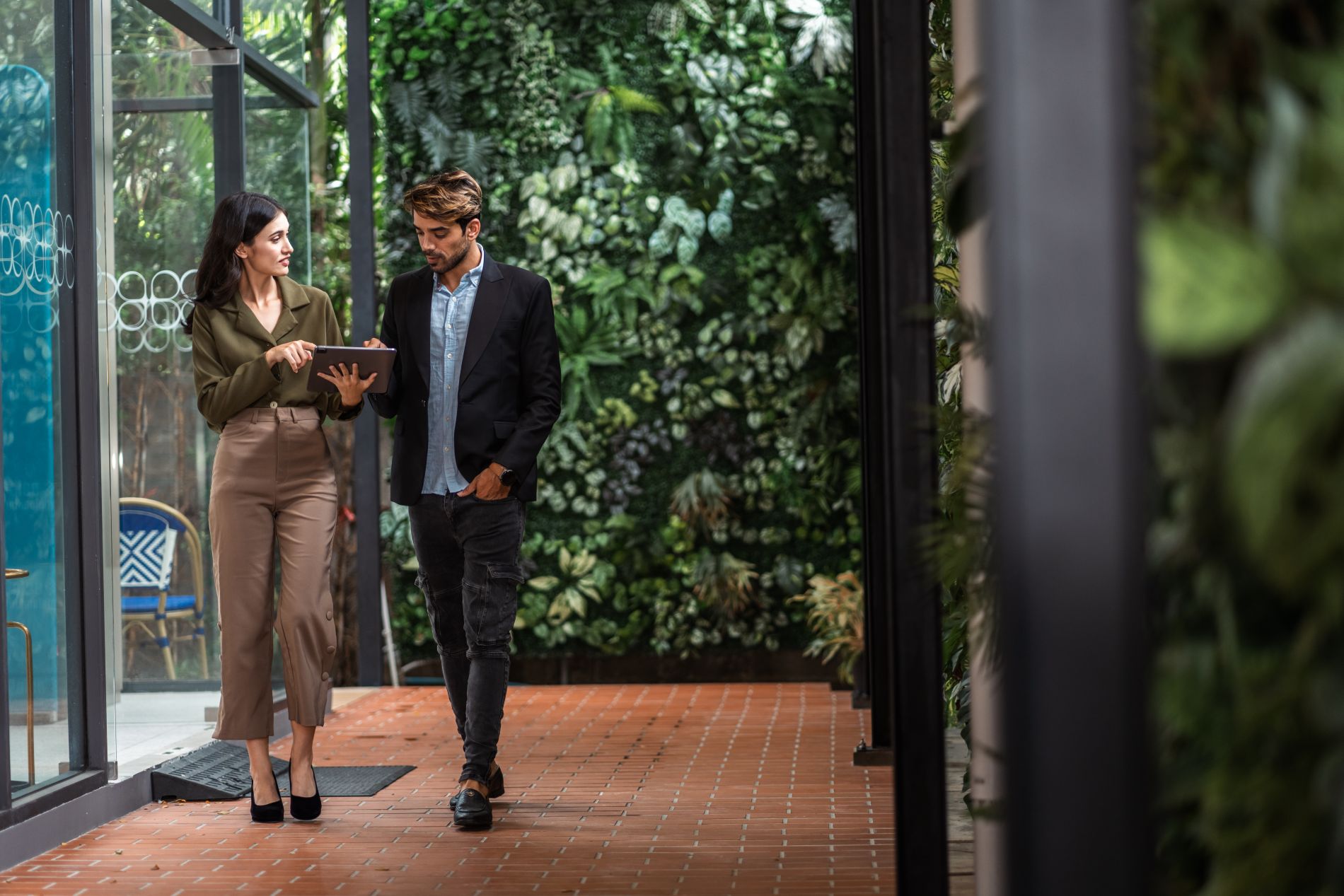
Vertical gardens integrate plants directly into building walls, creating visual greenery and improving building performance. They transform sterile facades into living systems. From street level, vertical gardens create visual interest and psychological restoration. From a systems perspective, they improve building thermal regulation, capture air pollutants, reduce noise, and support bird and insect habitat.
Vertical gardens work at building scale and city scale. Individual buildings with vertical greening improve their performance and appearance. Cities where many buildings have vertical gardens create visual transformation and ecosystem benefits. Singapore’s vertical greening mandate has created measurable improvements in air quality and urban biodiversity while transforming how the city appears to residents and visitors.
The implementation challenge is maintenance. Vertical gardens require irrigation systems, occasional pruning, and monitoring. But the benefits—visual, thermal, ecological—justify the effort. The key is designing systems that are maintainable rather than requiring constant intensive care.
Water Features in Urban Design: Rivers and Restored Waterways
Cities built around water—rivers, canals, waterfronts—have inherent biophilic advantage. Water creates focal points, supports recreation, manages stormwater, and provides wildlife habitat. Cities that prioritize water access—restored urban rivers, designed canals, waterfront parks—show measurable improvements in public health and satisfaction.
Many cities destroyed their waterways during industrial development, burying rivers and replacing them with concrete. Recent biophilic urbanism reverses this—restoring visible waterways, creating riparian corridors, designing public spaces around water. The Netherlands, Copenhagen, and increasingly American cities are reclaiming waterways as central urban features rather than hidden infrastructure.
Restored waterways create nature corridors through cities—places where wildlife can move, where people can experience water and nature, where stormwater gets managed naturally rather than through pipes. The result is cities that feel more alive and support both human and ecological wellbeing.
Green Corridors: Connecting Nature Through Cities
Green corridors are networks of green spaces—parks, tree-lined streets, gardens, restored natural areas—that connect throughout cities. They serve multiple functions: wildlife habitat corridors allowing animal movement through urban areas, pedestrian pathways for recreation and commuting, stormwater management through vegetation, and psychological restoration through accessible green space.
Cities designed with connected green corridors create very different experience than cities where parks are isolated islands. When nature is threaded throughout urban fabric—accessible from your neighborhood, visible on your commute, connecting to larger natural areas—biophilic effect is constant rather than occasional. You don’t need to travel to parks. You’re living within green infrastructure.
Building-Scale Biophilic Architecture: Individual Projects at Urban Scale
Individual buildings designed with biophilic principles contribute to urban character. Bosco Verticale’s vertical forests visible from Milan’s streets create visual transformation. Buildings with green roofs, water features, natural materials, and strategic views demonstrate that architecture can embody biophilic principles. When enough buildings shift toward biophilic design, urban character fundamentally changes.
This is why understanding successful biophilic design examples at architectural scale matters. Individual projects demonstrate feasibility and benefits. As projects accumulate, they create city-level effect. Biophilic architecture at building scale creates conditions for biophilic urbanism at city scale.
Singapore’s City in a Garden: Biophilic Urbanism in Practice
Singapore’s ‘City in a Garden’ vision demonstrates that extreme urban density doesn’t require sacrificing nature. The government mandates green roofs and walls on new buildings. Public spaces prioritize park connectivity and water features. Vertical gardens transform facades. The result is a city of 5.5 million people that maintains visible green throughout.
Singapore’s approach shows that biophilic urbanism requires systemic integration—not individual buildings making independent decisions, but city-level policy directing biophilic implementation. When building codes require green elements, when zoning prioritizes park connectivity, when water management happens through visible wetlands rather than hidden pipes, nature becomes infrastructure rather than luxury.
Economic Benefits of Biophilic Urban Design
Biophilic cities attract talent and business. Companies want to locate where employees want to live. Residents want cities with accessible nature. Property values increase in neighborhoods with strong green infrastructure. Tourism increases when cities are visually distinctive and offer nature experiences. Public health costs decrease through improved air quality and reduced mental health issues. These economic factors justify biophilic urban investment.
Green infrastructure provides infrastructure benefits. Visible stormwater management through rain gardens and restored wetlands costs less than underground pipe infrastructure while providing multiple benefits. Vegetation reduces urban heat island effect decreasing cooling demands. Biodiversity supports ecosystem services that provide economic value. Biophilic urbanism isn’t sacrifice of economic efficiency. It’s improved economic and ecological efficiency through systemic integration of nature.
Challenges and Practical Implementation
Biophilic urbanism requires overcoming substantial resistance. Conventional development maximizes building footprint—green space costs money that developers want to minimize. Zoning regulations often prohibit green roofs or vertical gardens. Maintenance concerns defer implementation. Public perception sometimes sees green infrastructure as inefficient use of expensive urban land.
Successful cities overcome these barriers through regulation and demonstrated results. When governments mandate green requirements, developers integrate them. When early projects demonstrate benefits, others follow. When residents experience improved quality of life, support grows. Singapore’s success shows that rapid adoption is possible with strong systemic commitment.
For understanding how these principles scale from individual spaces to cities, returning to how biophilic design applies across different contexts clarifies the continuity of principles from building to city scale. The same underlying approach—creating conditions that support human biology and ecological health—applies whether you’re designing a bedroom or a city.
The Future: Cities Designed for Life
Biophilic urbanism represents fundamental shift in how we think about cities. Instead of asking how to build density while minimizing nature, we ask how to integrate nature while maintaining urban function. Instead of seeing nature as obstacle to development, we see it as infrastructure supporting both human and ecological wellbeing.
As cities worldwide face climate impacts and quality-of-life challenges, biophilic urbanism offers proven approach. Nature integration reduces heat island effects, manages water, supports biodiversity, and improves resident wellbeing simultaneously. That’s not compromise. That’s synergy.

Carl, a biophilic design specialist, contributes his vast expertise to the site through thought-provoking articles. With a background in environmental design, he has over a decade of experience in incorporating nature into urban architecture. His writings focus on innovative ways to integrate natural elements into living and working environments, emphasizing sustainability and well-being. Carl’s articles not only educate but also inspire readers to embrace nature in their daily lives.