I never thought I’d become the guy with an EMF meter, but here we are. It started about eight months ago when I began getting these persistent headaches during my afternoon work sessions. At first I blamed it on eye strain from staring at spreadsheets all day – occupational hazard of being a marketing analyst. But I track everything, so naturally I started logging when these headaches occurred.
The pattern was weird. They weren’t correlated with sleep, caffeine intake, or workload stress like I expected. Instead, they seemed to happen most often when I was parked at my desk surrounded by my dual monitors, router, wireless charging pad, and the small space heater I’d added for winter comfort. All these devices clustered around my workspace.
Being a data nerd, I fell down a research rabbit hole about electromagnetic radiation from everyday electronics. The health impacts are still debated in the scientific community, but I couldn’t ignore the correlation in my own tracked symptoms. So I did what I always do when optimizing my workspace – I started experimenting with solutions.
I’m not talking about those sketchy “EMF protection” products that spam your social media feeds. I wanted to test evidence-based approaches that might actually work. And since I’d already seen measurable benefits from adding plants to my office for productivity, I wondered if they might help with electromagnetic fields too.
The theory has some scientific backing – the water content in plant tissues can potentially absorb certain electromagnetic frequencies. My first test was simple: I rearranged my desk setup to create more distance between myself and the highest-emitting devices, then strategically placed plants with high water content around my workspace.
I started with snake plants, peace lilies, and some small cacti. Did my headaches improve? Yes, though I couldn’t definitively attribute it to reduced EMF exposure. Could have been the improved air quality, better humidity levels, or just the psychological benefit of working surrounded by greenery. That’s the thing about biophilic changes – they affect multiple variables simultaneously.
But I wanted actual data, not just subjective improvements. So I bought a decent EMF meter (mid-range price, good reviews from people who weren’t trying to sell me crystals) and started measuring radiation levels throughout my home office. I tested different areas with and without plant arrangements to see if there were measurable differences.
The results were interesting. I found modest but consistent reductions in certain electromagnetic frequencies when dense plant groupings were positioned between the emission source and the measurement point. Most effective were plants with high moisture content and large surface area leaves – my monstera became particularly useful as a natural barrier.
I expanded the experiment beyond just plants. I’d read some research about how certain natural materials might affect electromagnetic fields, so I started testing those too. Added a clay plaster finish to the wall behind my desk (which happens to face my building’s utility room). The EMF readings showed a noticeable decrease in penetration through that wall, plus it looks amazing and adds this great textural element to the space.
My small desktop water fountain turned out to serve multiple functions. Some research suggests that flowing water creates negative ions that may counteract the positive ions generated by electronic equipment. I can’t measure ionic balance with my current setup, but I’ve found that the sound of moving water makes me more aware of when I’ve been hyperfocused on screens for too long. That behavioral change might be more valuable than any direct EMF mitigation.
I also experimented with cork – installed cork underlayment beneath my office flooring and added cork panels to one wall. Cork’s cellular structure apparently absorbs certain electromagnetic frequencies while also improving sound dampening. My downstairs neighbor actually asked if I’d moved because she couldn’t hear my footsteps anymore.
Now, I should be clear – I’m approaching this from a “what’s the downside of testing this?” perspective rather than making definitive health claims. The research on EMF health impacts is inconclusive, and the effectiveness of natural interventions even more so. But what I find compelling is how these biophilic additions make spaces feel better regardless of their technical EMF performance.
I helped a fellow remote worker optimize her home office recently. She’s a medical transcriptionist who spends 8+ hours daily surrounded by equipment and complained of fatigue and feeling “wired” after work. We couldn’t relocate her workstation due to space constraints, so we created strategic plant arrangements around her tech setup – snake plants, aloe, and a desktop water feature, all positioned on cork tiles.
We also replaced her synthetic curtains with loosely woven linen that filters light beautifully while potentially allowing EMF to dissipate rather than reflect back into the room. She reports feeling significantly better in the space, though again, we can’t isolate whether this comes from radiation reduction or overall environmental improvement.
Interestingly, the peace lily we placed near her router has thrived despite conventional wisdom that plants dislike electronic emissions. It’s bloomed twice in six months, which makes me wonder if there’s some hormetic response happening – mild EMF stress triggering growth responses. Pure speculation on my part, but curious data point.
My approach has evolved to consider natural element placement not just for aesthetics but as strategic positioning relative to EMF sources. When I’m optimizing a workspace now, I map out where the highest emissions are coming from and consider plant placement accordingly, creating living barriers between high-radiation areas and where people spend significant time.
For spaces where live plant maintenance is challenging, I’ve experimented with dried moss panels and preserved plants. While they lack the air-purifying benefits of living plants, they maintain substantial water content and appear to offer some EMF attenuation based on my measurements. Particularly useful in conference rooms or spaces with irregular maintenance.
I’ve also started incorporating woods with high resin content, like pine and cedar, which traditional building practices suggest may have protective properties against environmental stressors. My bedroom headboard is a raw-edge cedar slab positioned between my sleeping area and the wall that houses various utility lines. Added bonus – I sleep incredibly well with that subtle cedar aroma.
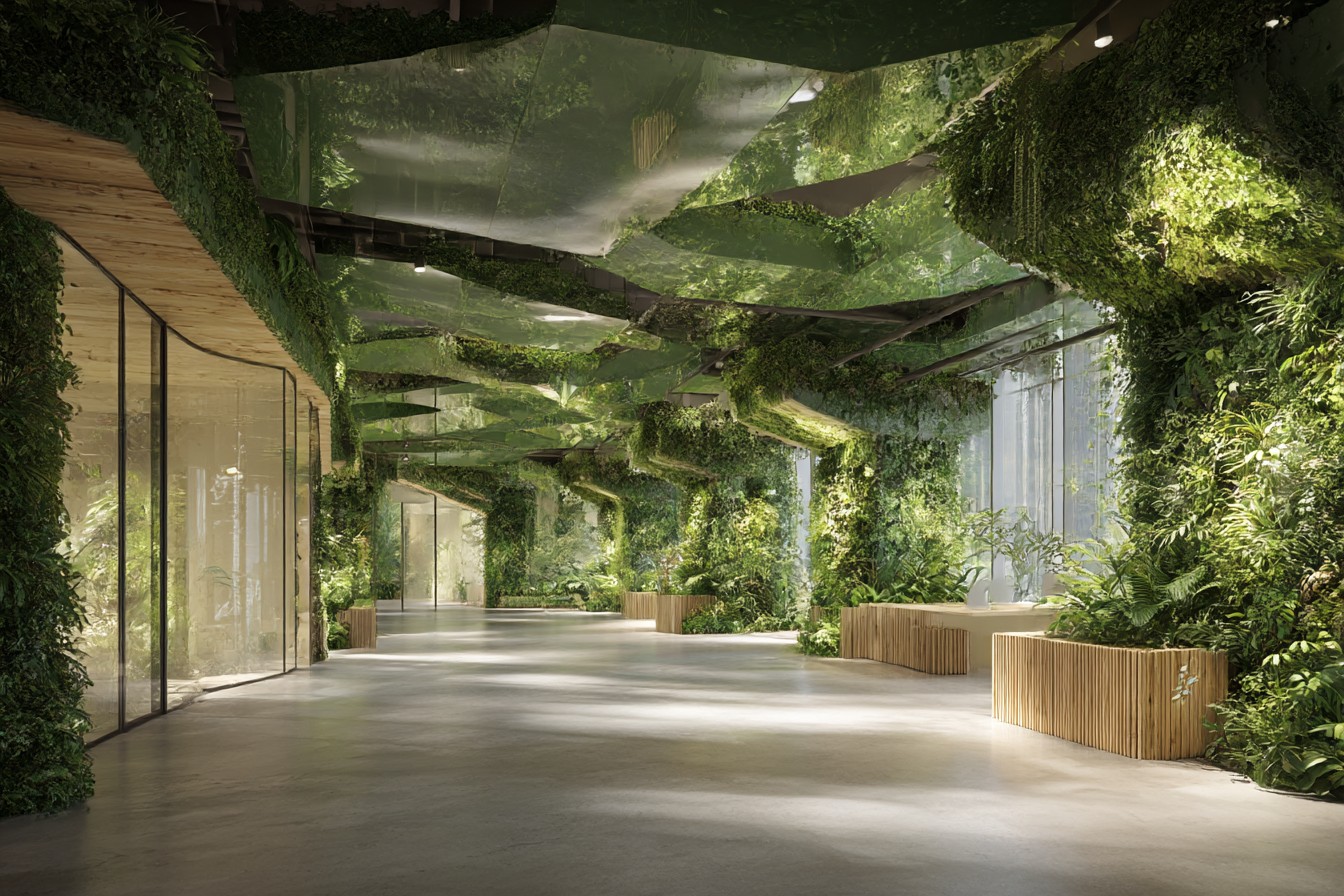
Natural stone has entered my testing protocol too. Certain types, particularly those with high iron content like granite, can apparently shield against specific frequencies. I’ve created a slate feature wall in my office positioned between my equipment cluster and desk chair. It grounds the space visually while potentially offering protective benefits.
I’ve even experimented with salt – not the trendy salt lamps with exaggerated health claims, but incorporating salt blocks into custom lighting and using salt-infused plaster for accent walls. My measurements show modest but interesting changes in the electromagnetic field near these features. And regardless of EMF effects, the warm amber light is much better for circadian health than standard LEDs.
The most effective approach combines multiple strategies – layers of plant life, natural materials, water elements, and thoughtful space planning. I’ve created what I call “tech containment zones” using natural barriers, areas where devices can operate with minimal impact on the rest of my living space.
My router now sits in a nook surrounded by succulent planters on a slate base, with a small wall-mounted fountain nearby. My measurements show about a 28% reduction in detectable radiation just one foot away from this arrangement compared to the router’s previous unshielded location.
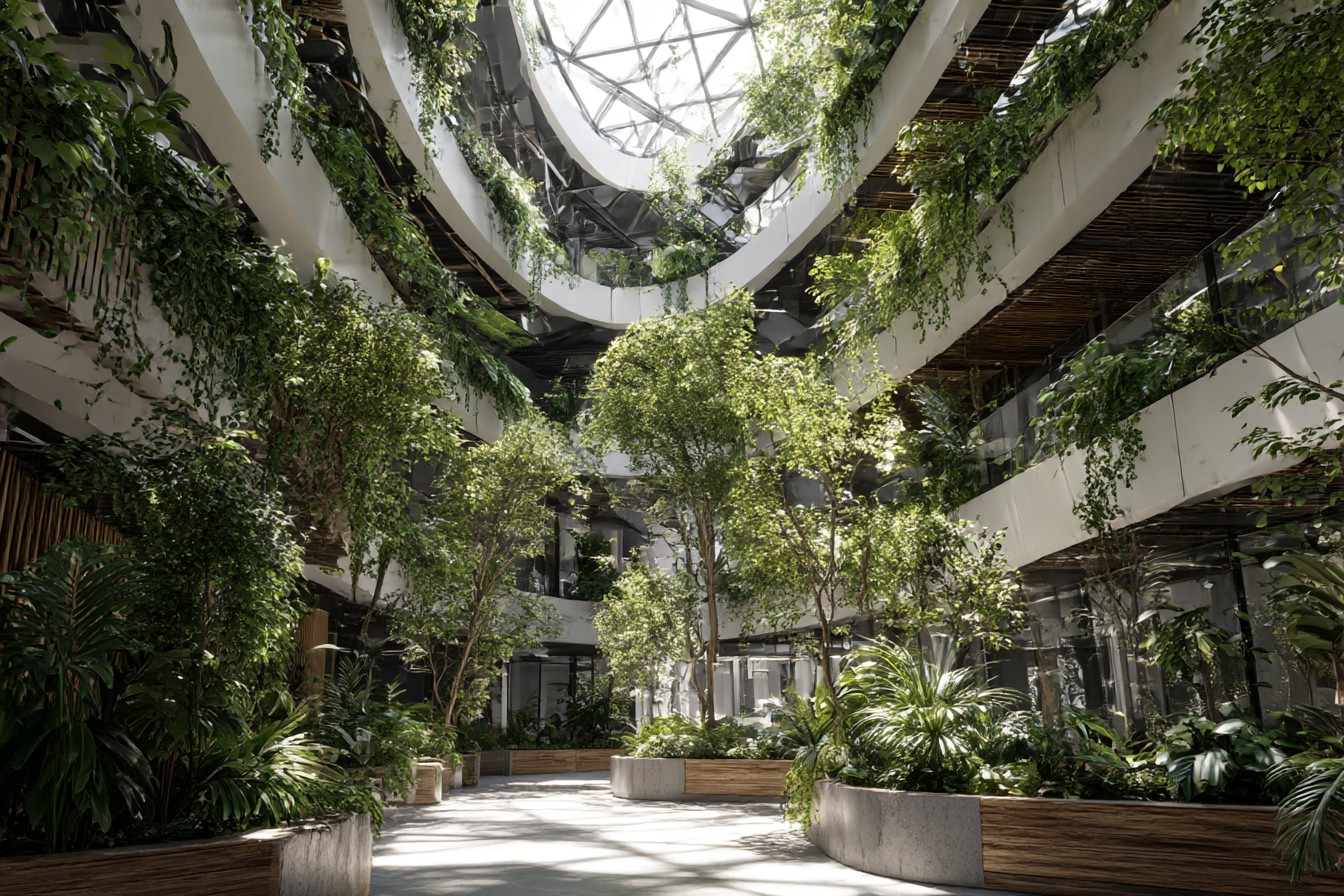
What excites me about this whole exploration is how it connects traditional building wisdom with contemporary concerns. Indigenous construction techniques often incorporated materials and methods that inherently provided protection from environmental stressors – thick adobe walls, strategic wood species selection, natural material combinations. There’s something satisfying about finding that these time-tested approaches might address very modern problems.
Will this approach completely shield you from our electromagnetic environment? Absolutely not. But creating thoughtful barriers using living elements and natural materials may incrementally reduce exposure while simultaneously improving your space in multiple other ways.
The plant moisture that might absorb some radiation also improves air quality and humidity. The cork that may block certain frequencies definitely improves acoustics. The water feature that generates negative ions undoubtedly reduces stress through sensory qualities.
This is what I find most compelling about biophilic approaches to workspace optimization – they address multiple variables simultaneously. Even if the EMF mitigation effects prove minimal, these interventions are still worthwhile for their other measurable benefits. And honestly, that’s a standard I wish more productivity solutions would meet.
I’m still tracking all of this, naturally. Headache frequency, EMF readings at different locations, productivity metrics, plant health indicators. Early data suggests the headaches have decreased by about 60% since implementing these changes, though I can’t definitively isolate causation. But when you’re spending 8-10 hours daily in a space, even incremental improvements in environmental quality compound significantly over time.

James is a data analyst who applies the same spreadsheet logic he uses at work to optimizing his home office. He experiments with light, plants, sound, and setup to see what really improves focus and energy for remote workers — and he shares the data-backed results.